In this case study
Intent data is everywhere.
But revenue impact is not.
Over the last few years, B2B organizations have invested heavily in intent platforms, behavioral analytics tools, and buyer signal tracking systems. Dashboards now show keyword surges, topic spikes, and account-level engagement activity.
Yet many companies still struggle with a simple question:
If we know who is researching, why aren’t we closing more deals?
The answer lies not in collecting intent signals.
It lies in activating them correctly.
The Intent Data Misconception
Intent data is often treated as a shortcut to pipeline.
Account shows surge → Add to campaign → Send outreach → Expect meeting.
But intent without orchestration creates noise.
Many teams:
- Overreact to minor signal spikes
- Blast generic messaging to “in-market” accounts
- Fail to distinguish early research from active procurement
- Ignore buying committee expansion
The result?
Signal fatigue.
Low response rates.
Underperforming pipeline.
Intent data is not a silver bullet.
It is a prioritization engine.
What Intent Actually Represents
Intent is not buying confirmation.
It is buying momentum.
Research behavior tells us:
- A topic is being explored
- A problem is being defined
- A vendor category is being evaluated
- Internal conversations may be starting
But it does not automatically mean:
- Budget is approved
- Timeline is confirmed
- Vendor shortlist is finalized
That distinction matters.
The Three Stages of Intent Activation
High-performing demand teams classify intent into structured phases.
Exploration Stage
Signals include:
- Educational content consumption
- Broad keyword research
- Industry trend engagement
Messaging focus:
- Problem framing
- Insight-led thought leadership
- Risk awareness
- Executive positioning
Goal: Establish credibility early.
Evaluation Stage
Signals include:
- Competitor comparison research
- Deep product-related keyword engagement
- Whitepaper downloads
- Technical content interaction
Messaging focus:
- Differentiation clarity
- Use case relevance
- Integration proof
- ROI validation
Goal: Influence vendor consideration.
Procurement Stage
Signals include:
- Demo engagement
- Pricing research
- Case study deep dives
- Security & compliance inquiries
Messaging focus:
- Budget alignment
- Implementation roadmap
- Deployment confidence
- Risk mitigation
Goal: Accelerate decision-making.
Intent activation must align with stage, not just signal presence.
From Signals to Structured Orchestration
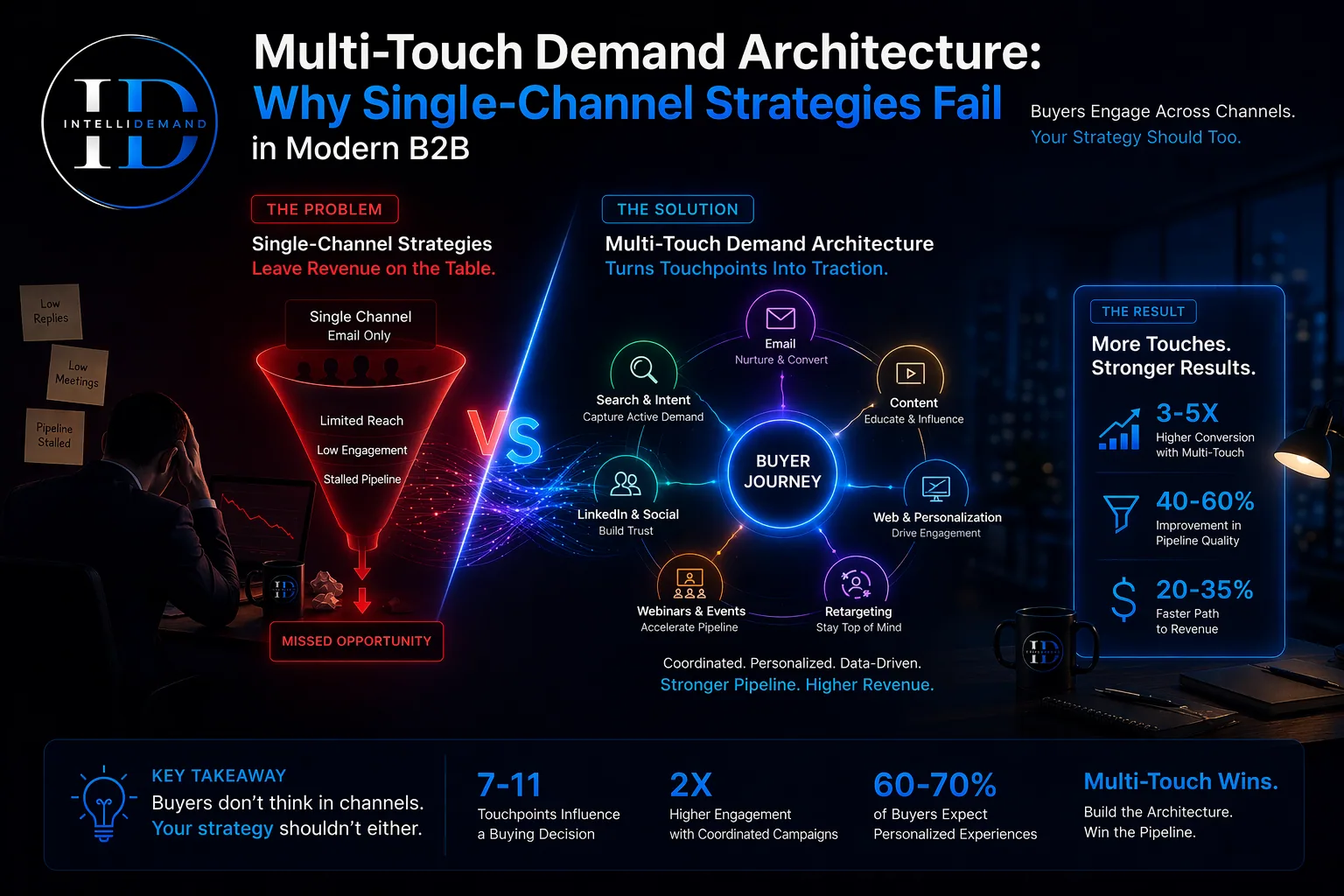
Enterprise conversations do not happen from a single email.
They happen from coordinated multi-touch engagement.
High-performance activation includes:
- Account-based email sequences
- Persona-aligned messaging
- Tele-qualification outreach
- LinkedIn ABM layering
- Retargeting reinforcement
- CRM-triggered nurture workflows
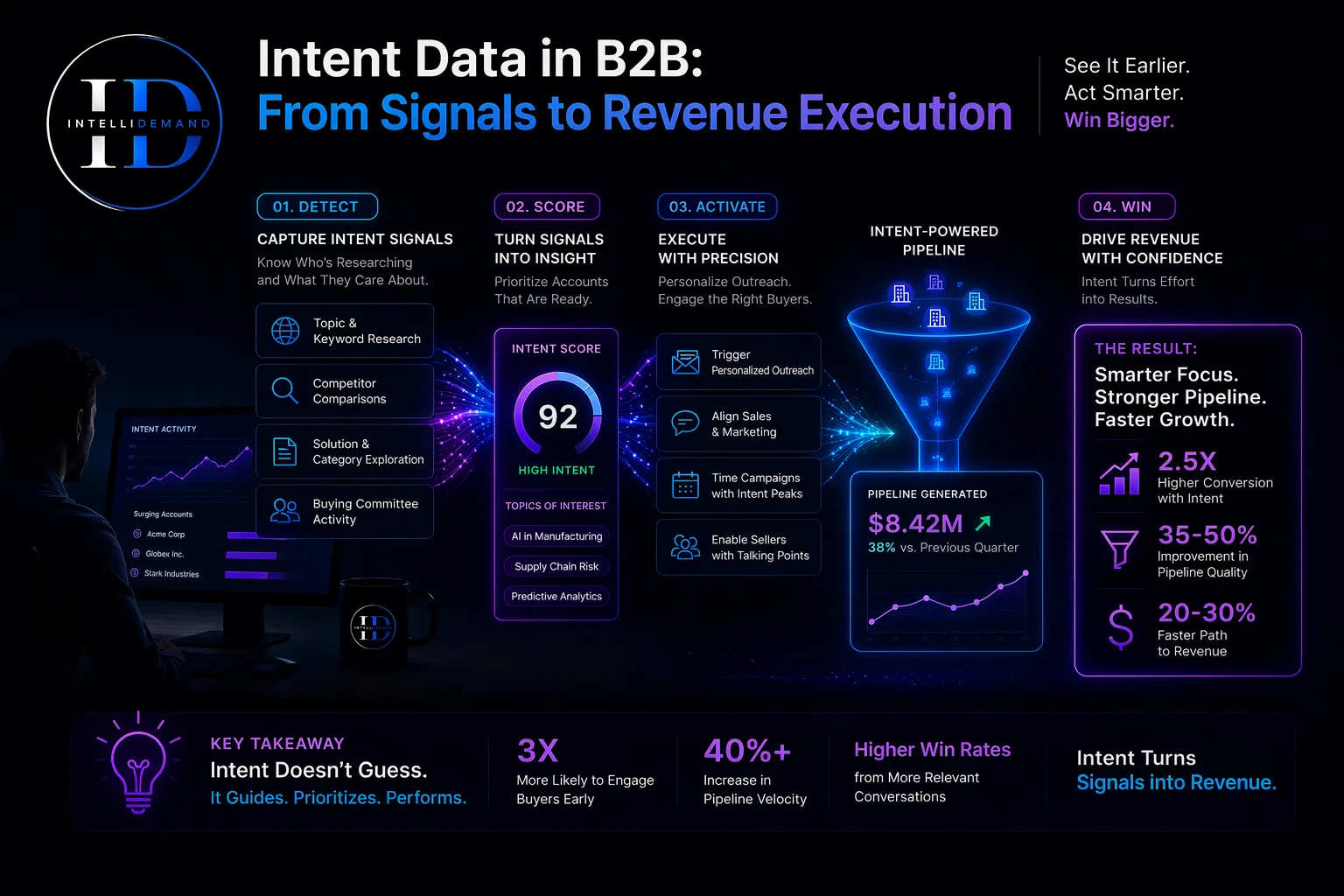
Intent prioritizes who to engage.
Architecture determines how to engage.
The Buying Committee Multiplier
One of the most common mistakes is engaging only one contact within an account showing intent.
Enterprise deals involve:
- Economic buyer
- Technical evaluator
- Operational influencer
- Procurement stakeholder
If only one persona is activated, internal alignment never builds.
When intent is detected, elite teams:
- Expand outreach to multiple roles
- Personalize messaging by stakeholder
- Synchronize timing across functions
This creates internal momentum.
The Role of Human Validation
Intent signals show interest.
Human qualification confirms readiness.
Before pushing accounts to sales, structured validation should confirm:
- Initiative existence
- Budget consideration
- Timeline range
- Decision-making authority
- Technology environment fit
Signal + validation = sales confidence.
Without validation, pipeline trust erodes.
Why Most Intent Programs Underperform
Common breakdowns include:
- Overreliance on third-party signals
- Lack of stage-based messaging
- No multi-stakeholder penetration
- Poor sales alignment
- Weak follow-up discipline
Intent tools alone do not build pipeline.
Process does.
Revenue Engineering with Intent
When activated correctly, intent intelligence improves:
- SQL acceptance rates
- Meeting conversion
- Opportunity velocity
- Sales cycle duration
- Forecast predictability
It shifts demand generation from reactive outreach to strategic prioritization.
Intent + ABX = Enterprise Acceleration
The most effective model combines:
- Intent prioritization
- Account-based experience (ABX)
- Multi-touch orchestration
- Qualification discipline
- Revenue tracking
This ensures:
- Right accounts
- Right timing
- Right stakeholders
- Right message
- Right stage
Pipeline becomes engineered, not accidental.
The Executive-Level Impact
When intent activation is structured:
- Marketing earns revenue credibility
- Sales trusts pipeline quality
- Deal cycles shorten
- Budget efficiency improves
- Competitive positioning strengthens
Intent becomes a strategic asset, not just a dashboard metric.
The 2026 Standard
In 2026 and beyond, winning B2B teams will:
- Treat intent as prioritization intelligence
- Build stage-based activation models
- Expand into buying committee mapping
- Integrate human validation layers
- Measure performance by revenue impact
Those who simply purchase intent data without orchestration will continue to struggle.
Final Thought
Intent signals are not revenue.
They are opportunity indicators.
The difference between signal and sales lies in activation discipline.
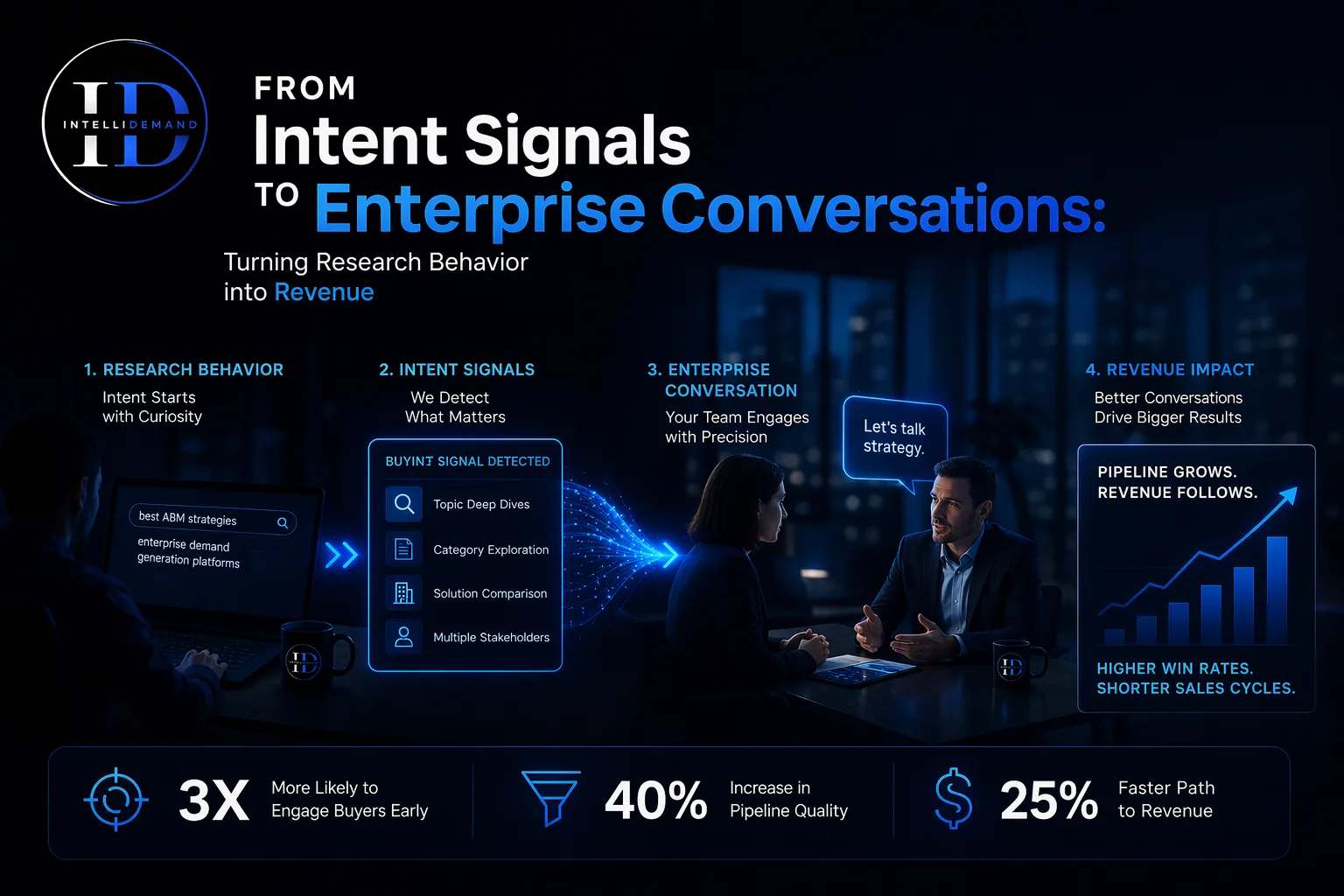
Organizations that transform research behavior into structured enterprise conversations will dominate competitive markets.
Those that chase spikes without architecture will remain reactive.
Intent does not close deals.
Strategic activation does.