In this case study
B2B marketing is not broken.
But the way many organizations measure it is.
For years, success was defined by lead volume:
More MQLs.
Lower CPL.
Bigger databases.
But in 2026, enterprise growth leaders are asking a different question:
“How much revenue did marketing actually influence?”
That shift changes everything.
The Volume Illusion
High lead counts create the appearance of performance.
Dashboards look impressive.
Campaign reports feel productive.
Databases expand rapidly.
But inside the revenue engine, cracks begin to form:
- Sales rejects large percentages of MQLs
- Follow-up delays increase
- Opportunity conversion remains low
- Forecasting becomes unpredictable
- Marketing credibility erodes
The issue isn’t effort.
It’s structure.
When marketing optimizes for volume instead of buying intent, quality declines, and revenue suffers.
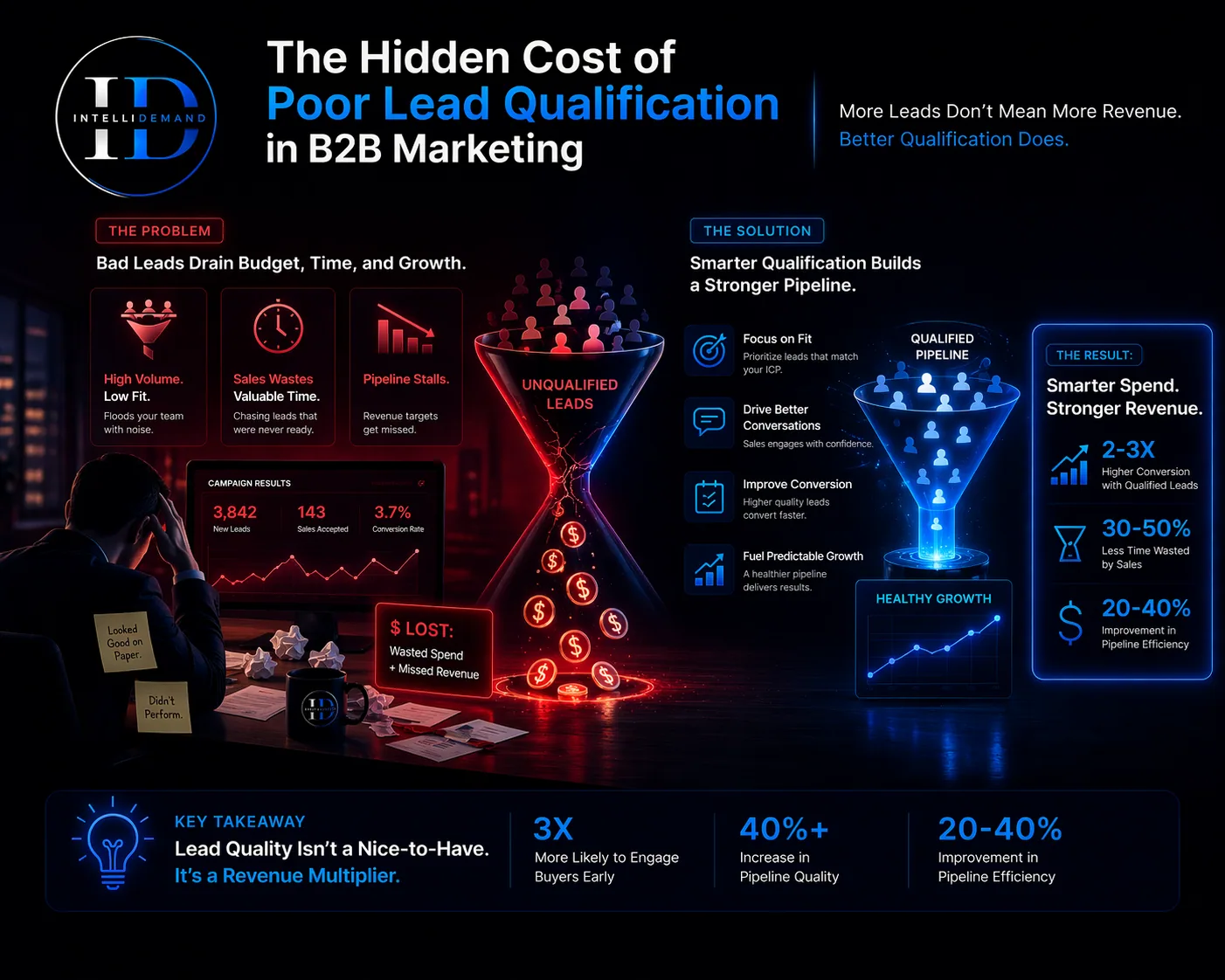
The Real Cost of Volume-First Thinking
Volume-driven programs often create:
Inflated MQL Metrics
Leads that meet basic demographic filters, but lack active buying signals.
Low Sales Acceptance Rates
When sales teams don’t trust lead quality, pipeline velocity slows.
Increased CAC
More outreach attempts required to convert low-intent contacts.
Reputation Risk
Over-targeted, under-personalized outreach damages brand perception.
Pipeline Leakage
Leads enter CRM systems but never progress meaningfully.
The result?
Activity without acceleration.
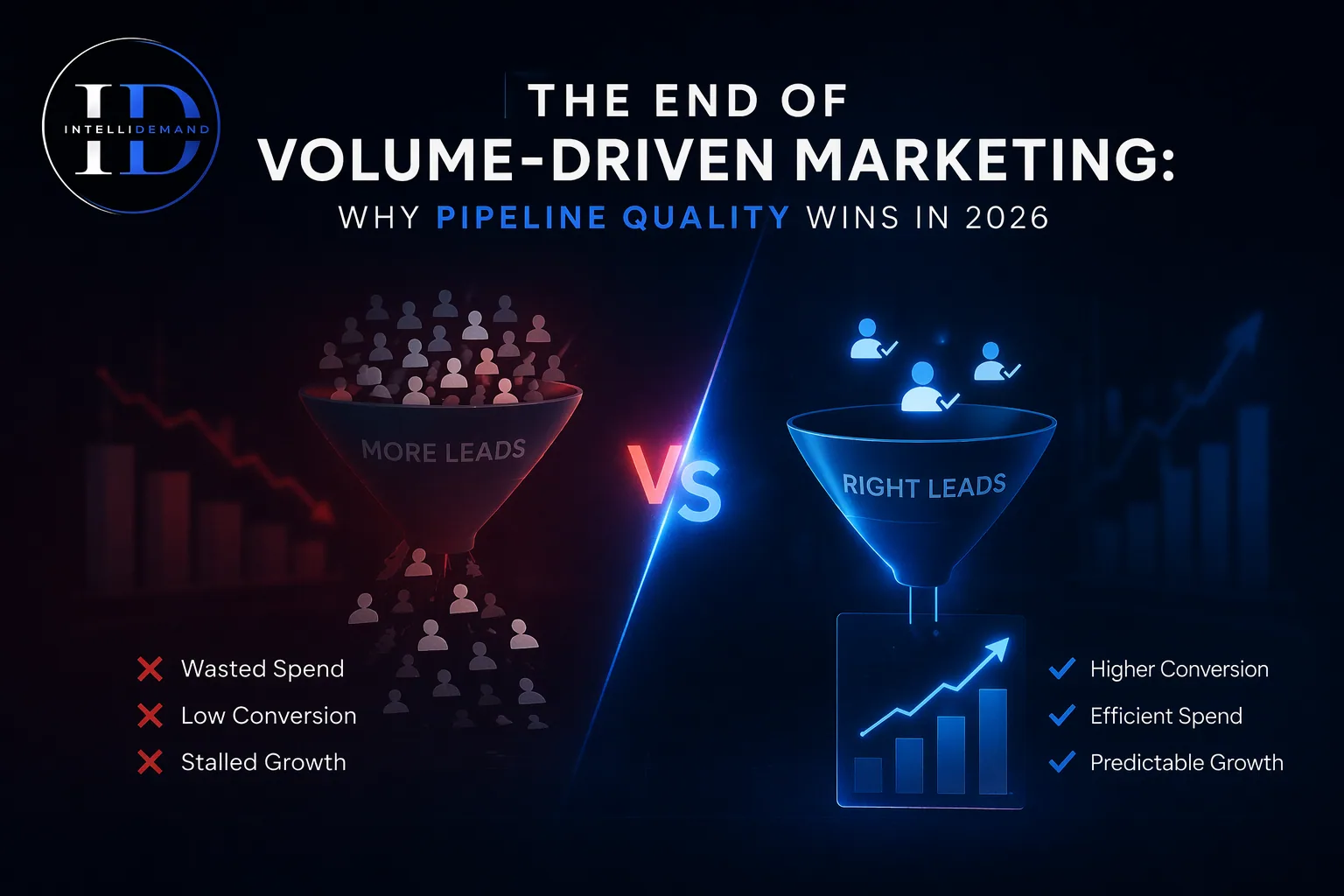
The Shift Toward Pipeline Quality
High-performance B2B organizations no longer measure success by “leads generated.”
They measure:
- SQL acceptance rate
- Opportunity conversion rate
- Pipeline velocity
- Influenced revenue
- Cost per opportunity
- Revenue predictability
Pipeline quality becomes the benchmark.
Not quantity.
What Pipeline Quality Actually Means
Pipeline quality is not about being selective.
It’s about being precise.
A high-quality pipeline includes:
- Accounts showing research intent
- Contacts with role authority
- Confirmed initiatives
- Budget alignment
- Timeline clarity
- Multi-stakeholder engagement
Quality reduces friction across the revenue system.
Why Enterprise Buyers Demand Better Targeting
Modern B2B buyers are sophisticated.
They:
- Research anonymously
- Compare multiple vendors
- Consult peer networks
- Evaluate risk carefully
- Delay engagement until late in the cycle
When marketing pushes generic messaging to cold audiences, it interrupts rather than aligns.
Quality-driven demand aligns with buying momentum.
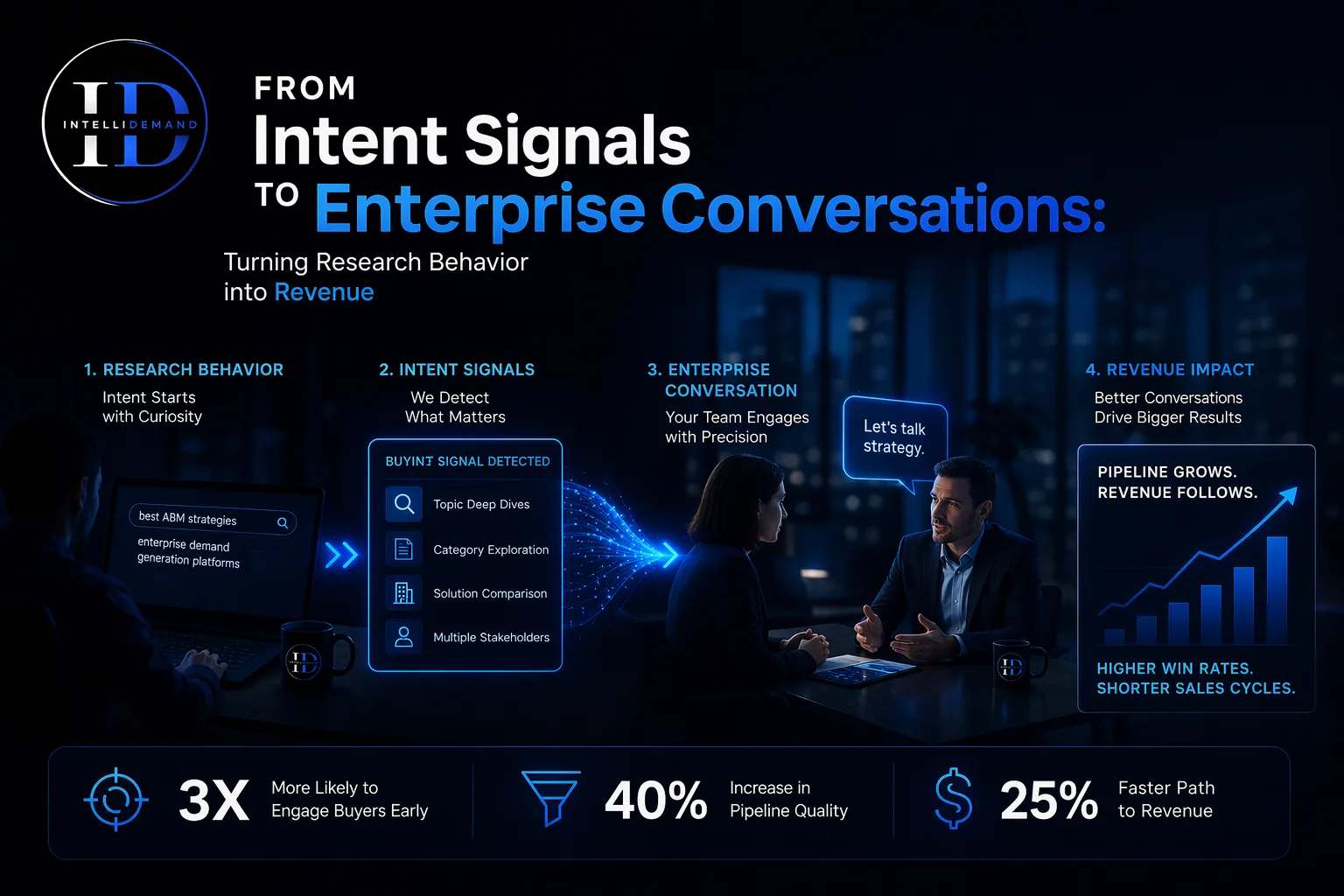
The Role of Intent Intelligence
Intent signals are now foundational.
But they must be operationalized.
High-performing teams:
- Track topic-level research surge
- Monitor competitor comparisons
- Layer first-party behavioral signals
- Map buying committee engagement
Intent transforms targeting from static lists into dynamic prioritization.
From Single Leads to Account Architecture
Enterprise growth no longer revolves around individuals.
It revolves around accounts.
Pipeline quality increases when teams:
- Engage multiple stakeholders
- Align messaging by role
- Coordinate multi-touch outreach
- Personalize by buying stage
Account-based orchestration replaces isolated lead capture.
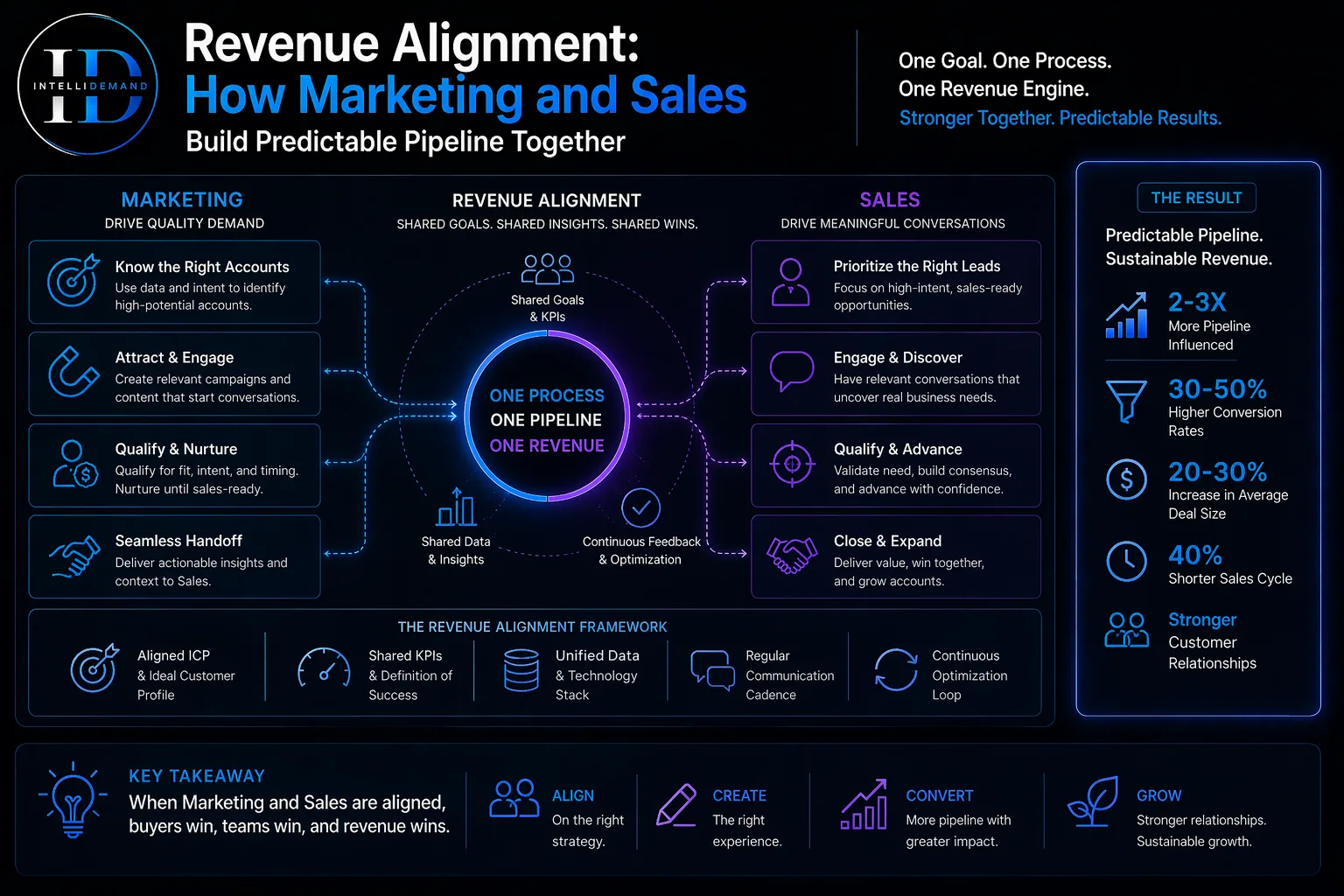
The Alignment Factor: Marketing + Sales
Volume-driven models often create tension.
Marketing hits MQL targets.
Sales questions readiness.
Pipeline quality models eliminate that gap.
High-performing teams:
- Define shared qualification frameworks
- Align on initiative validation standards
- Implement SLA-based follow-up processes
- Review opportunity progression jointly
Shared accountability improves revenue outcomes.
Revenue Engineering vs. Campaign Execution
There is a major mindset shift happening.
Campaign-based marketing focuses on activity.
Revenue engineering focuses on outcomes.
Revenue engineering includes:
- ICP refinement
- Intent-layered activation
- Multi-stakeholder engagement
- Human-verified qualification
- Pipeline attribution modeling
- Continuous optimization
It is structured.
Scalable.
Accountable.
What Changes in 2026
By 2026, the most competitive B2B organizations will:
- Prioritize revenue contribution over lead volume
- Eliminate vanity metrics from executive reporting
- Build ABX-based demand infrastructure
- Implement qualification discipline
- Tie every campaign to pipeline impact
Marketing will no longer justify itself with clicks or impressions.
It will justify itself with revenue.
The Competitive Advantage of Pipeline Precision
When pipeline quality improves:
- Sales cycles shorten
- Close rates increase
- Customer acquisition cost decreases
- Revenue becomes more predictable
- Executive confidence strengthens
Pipeline precision becomes a strategic differentiator.
Final Thought
Lead generation is not the goal.
Revenue acceleration is.
Organizations that continue optimizing for volume will struggle with inconsistent growth.
Those that engineer pipeline quality will outperform.
The future belongs to teams that stop chasing contacts,
and start designing demand systems built for revenue.